Soil
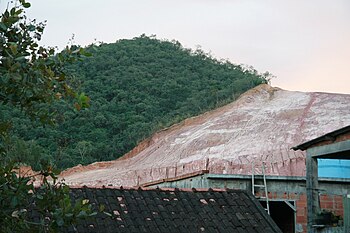 Undisturbed forests have a very low rate of soil loss (erosion), approximately 2 metric tons per square kilometer (6 short tons per square mile).[citation needed] Deforestation generally increases rates of soil loss, by increasing the amount of runoff
and reducing the protection of the soil from tree litter. This can be
an advantage in excessively leached tropical rain forest soils. Forestry
operations themselves also increase erosion through the development of (forest) roads and the use of mechanized equipment.
China's Loess Plateau was cleared of forest millennia ago. Since then it has been eroding, creating dramatic incised valleys, and providing the sediment that gives the Yellow River its yellow color and that causes the flooding of the river in the lower reaches (hence the river's nickname 'China's sorrow').
Removal of trees does not always increase erosion rates. In certain regions of southwest US, shrubs and trees have been encroaching on grassland. The trees themselves enhance the loss of grass between tree canopies. The bare intercanopy areas become highly erodible. The US Forest Service, in Bandelier National Monument for example, is studying how to restore the former ecosystem, and reduce erosion, by removing the trees.
Tree roots bind soil together, and if the soil is sufficiently shallow they act to keep the soil in place by also binding with underlying bedrock. Tree removal on steep slopes with shallow soil thus increases the risk of landslides, which can threaten people living nearby.
Post a Comment